
Just Found Mould? Start Here - Your (Panic-fREE) First Steps.

*This article is educational only and not medical or personalised advice.*
If you’ve recently discovered mould in your home - or you’re starting to wonder whether your symptoms or environment could be connected - the first thing I want you to know is this:
Don’t panic.
One of the biggest mistakes I see people make (and I see this a lot as I do Zoom consults about it), is trying to solve EVERYTHING all at once. It either causes massive overwhelm and people make mistakes/spend money they didn’t need to - or it causes them to take no action at all.
You’re not going to have all of the answers you need in one night of googling, there will be a staged approach to this - but I hope that this article serves to put you on the right path and work out what your next few steps should be, without freaking out.
In many cases, mould and water-damage issues are manageable once you understand what’s actually going on.
Step 1 - Ask Yourself Whether There’s A Pattern
One of the biggest clues with mould-related illness is often the pattern.
Ask yourself:
-Do I feel better away from home? Better outdoors, travelling or camping?
- Do I sleep better somewhere else?
- Did symptoms initially begin after moving homes, changing workplace, buying a second-hand car, joining a new gym, or spending time in another building?
- Are symptoms worse in certain rooms of the home?
- Do I feel worse after cleaning, vacuuming, sorting dusty belongings, or disturbing stored items?
- Do I feel better when I use an air purifier?
Sometimes the environmental clues start to tell the story before testing does.
Step 2 - Start With Basic (FREE) Health Screening Tests Online
If you suspect possible mould-related illness, also known as Chronic Inflammatory Response Syndrome (CIRS) or Biotoxin Illness, many people start with:
- a VCS (Visual Contrast Sensitivity) test
- and/or a cluster symptom questionnaire.
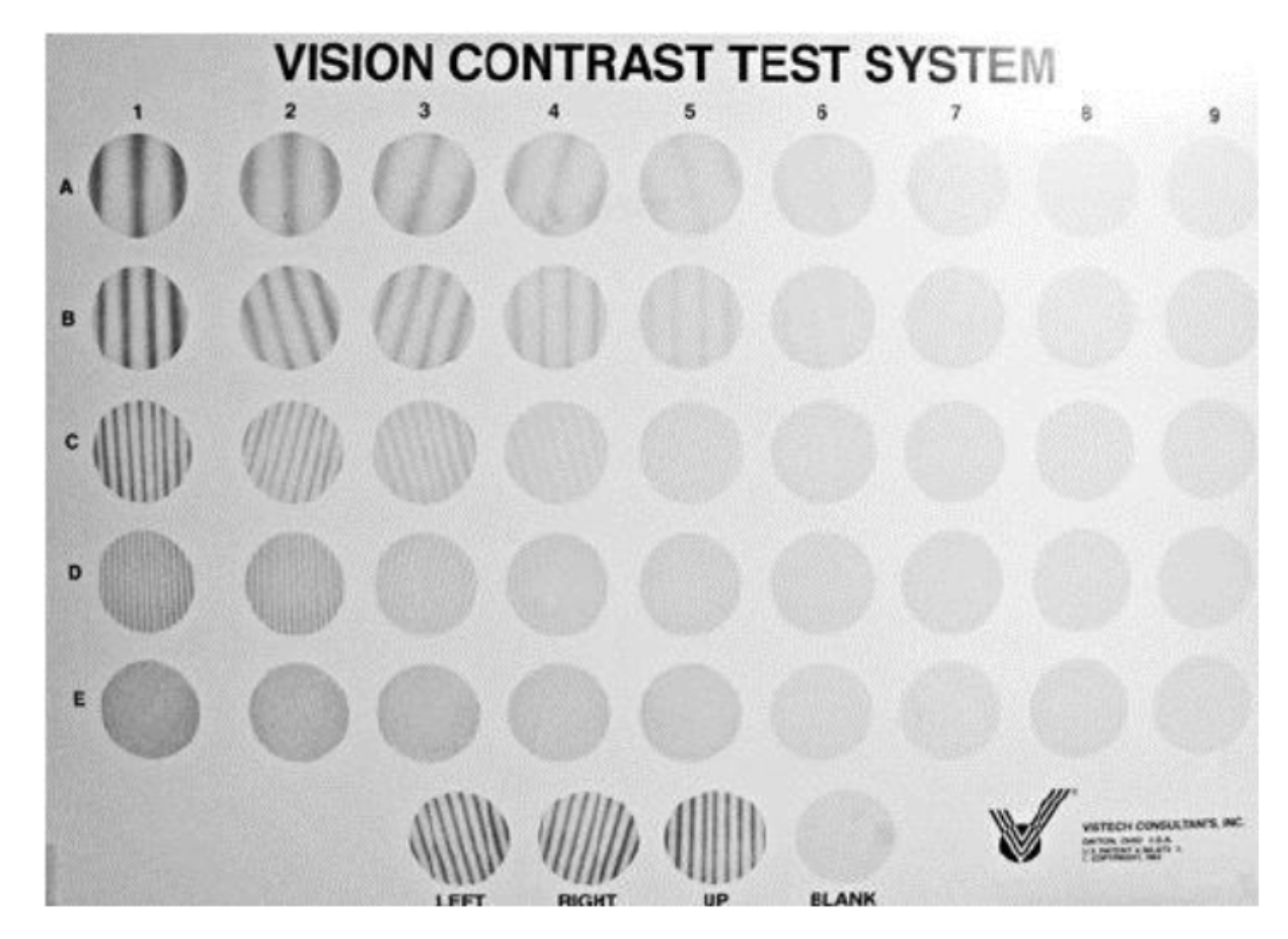
The VCS test is a simple online neurological screening tool commonly used in the CIRS world and by functional medical practitioners - it takes about 10mins on the computer, and is basically seeing if your eyeballs can recognise grey and white contrasting patterns in a normal, not affected by mould, kind of a way. There’s an 8% false negative rate, so passing the test doesn’t entirely exclude mould/biotoxin illness.
You can do it for free here (yes the website looks dodgy): https://www.vcstest.com
NOTE:
- Wear your glasses or contact lenses if you normally use them
- A minimum visual acuity of 20/50 is required for accurate results
You’ll be looking at a series of patterns like the pic below, and selecting which way you think the stripes are pointing. It gets harder as you go along.
The Cluster Symptoms test -
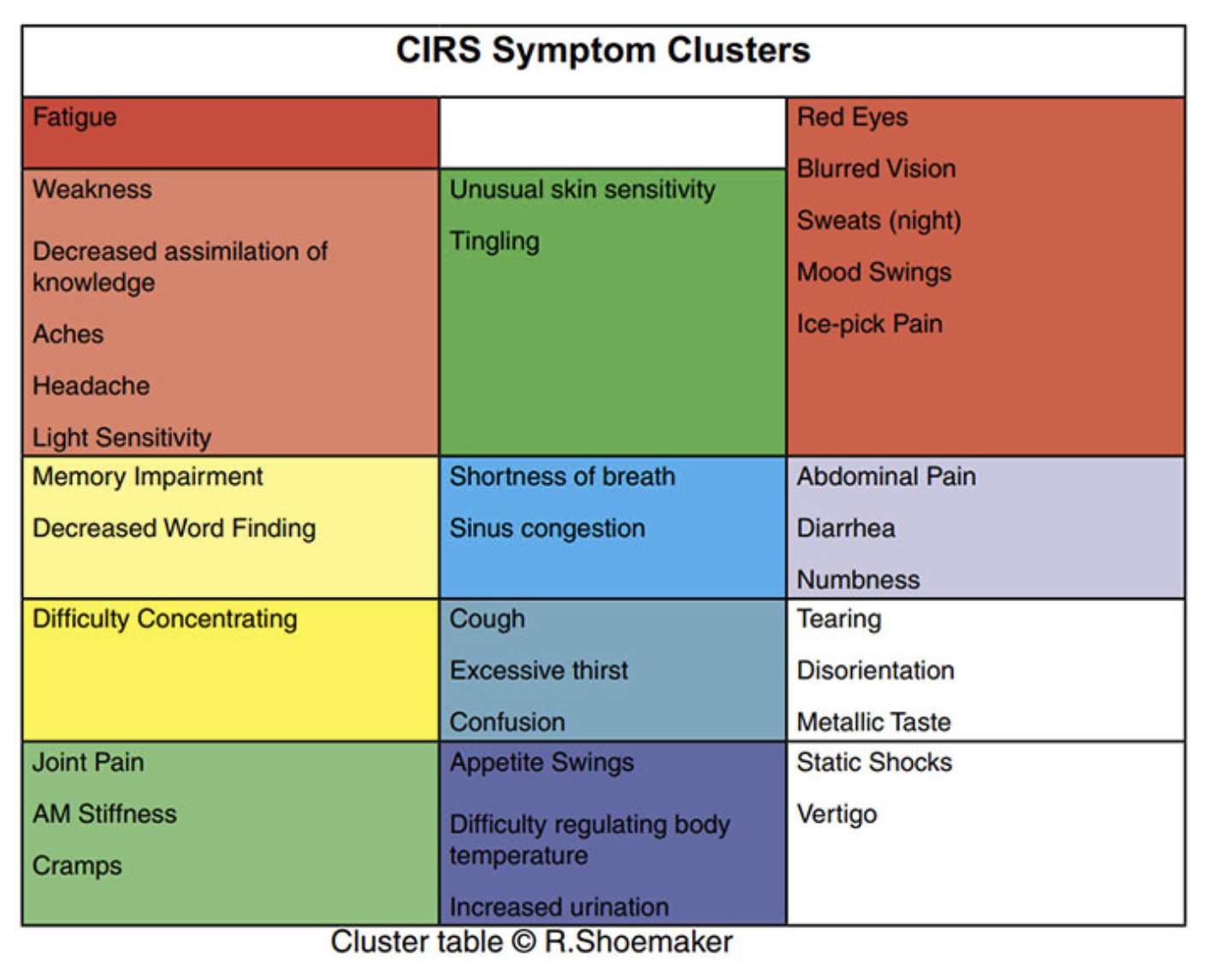
The cluster symptoms table was created by Dr. Richie Shoemaker (founder of The Shoemaker/CIRS Protocol) based on data collected from thousands of patients. If a patient is confirmed to have 8 or more clusters of symptoms the likelihood of presence of CIRS exceeds 95%. (98.5%+ when paired with the VCS test above).
How to use it:
Read through the symptoms listed in each coloured box and mark any symptoms you currently experience.
Once completed, count how many different boxes contain at least one symptom. Ticking one box = 1 point. So, the maximum number of “points” you can get is 13 (it doesn’t matter whether you can tick on symptom or 3 symptoms in a box)
(Or just scan through and hold a finger up to count each box you can pick a symptom from).
How to interpret the results:
Adults and children aged 11 and over:
Symptoms present in 6–8 clusters suggests you should proceed to the next stage of screening. 8 or more clusters is highly indicative of biotoxin illness (CIRS).Children under 11 years:
Symptoms present in 4-6 clusters is considered relevant and warrants further investigation. 6 or more clusters is highly indicative of biotoxin illness (CIRS).
As an adult, having symptoms in 8 or more clusters is consistent with biotoxin illness/CIRS and should be assessed by a knowledgeable practitioner. Having symptoms in 6 clusters supports the need for a thorough diagnostic workup ie. is treated as “suspicious”. I had 8 or 9 out of 13 when diagnosed, and my sister had only 6/13.
NOTE: Neither test diagnoses mould illness on its own - but they can help indicate whether further investigation may be worthwhile/see if you’re on the right track with this. Studies show that when someone fails the VCS test and also is positive for 8 or more cluster symptoms, their likelihood of having CIRS exceeds 98.5% (so you’d either get the house checked and/or contact a mould-literate functional medicine practitioner after that).
Step 3 - Look Around Your Home Properly
Mould problems almost always come back to moisture (basically, water where it shouldn’t be).
And importantly:
water-damaged buildings do NOT always look dramatic.
A lot of people imagine mould problems only happen after:
- floods, burst pipes, roofs collapsing, or obvious black mould everywhere.
But truly, many mould issues come from:
- condensation, slow leaks, poor ventilation, bathrooms staying damp too long or having hidden waterproofing failures, wet carpets, old water damage, poorly dried spills/minor leaks, subfloor/crawlspace/basement issues, or repeated minor wetting over years.
Walk around your home and ask yourself:
- Any musty smells?
- Condensation on windows?
- Bubbling or peeling paint?
- Ceiling stains?
- Damp carpets? Or remembering a time the carpets got wet
- Warped skirting boards/baseboards? Especially behind bathrooms/shower walls
- Old bathroom issues? Rotting or damage around the door frame of the bathroom? Or just generally having an old (20+ years) bathroom
- Previous or current plumbing leaks? Like “oh yeah the washing machine overflowed badly that time'“
- Mould around windows or blinds? (Telling us humidity levels are too high)
- Water-damaged flooring?
- Historical roof leaks?
- Has my air con not been cleaned in a few years or there were worries around how well it was installed? (Condensation build up in AC’s can cause mould and they can also leak). Wall hung split systems that haven’t been cleaned in 2 years+ will generally have visible mould growth apparent once you look carefully.
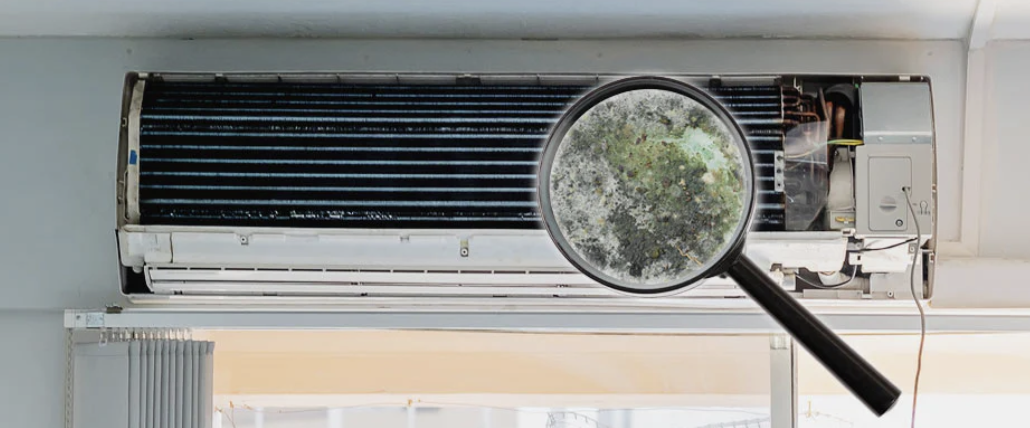
Even seemingly “small” moisture issues can matter. Staining under a sink for example can suggest hidden mould behind the cabinetry. Do not make the mistake of thinking that if you can’t see mould, mould isn’t the issue. 95% of the homes I inspect have NO VISIBLE MOULD - it’s all found with moisture meters, thermal imaging cameras, air and surface sampling based on these types of visual clues.
Step 4 - Understand That Mould Grows When Things Stay Damp
Mould grows when materials stay wet long enough.
It’s really that simple - it’s the reason mould grows every single time and the only reason it’ll grow.
- Mould on your window frames? Condensation is making the windows wet
- Mould on your ceiling? The ceiling is wet from a leak or high humidity levels keeping it wet
- Mould growing on your leather shoes and handbags? The air in your home is too wet (high humidity)
- Mould growing all over a wall? It’s probably wet from a leak
- Mould growing under your kitchen or bathroom sink? The taps are probably leaking
If you can keep things dry, you won’t have any mould issues (I’m serious - I never have mould growth to clean in my home ever). It cannot grow without excess moisture.
Sometimes just reducing humidity alone (using dehumidifiers) can make a massive difference.
Honestly, proper dehumidifiers are one of the most underrated mould-prevention tools I see.
Step 5 - Trial Time Away From The Environment (If Possible)
If you suspect your home may be contributing to symptoms, but can’t see any issues, and still don’t want to jump into testing yet - spending some time away from the environment can sometimes provide useful information.
Some people notice:
- clearer thinking,
- better sleep,
- less congestion,
- fewer headaches,
- reduced heart palpitations,
- less nervous system activation,
- or improved energy away
And then those symptoms return again when they go back.
This does not automatically prove mould is the issue, but from what I see professionally is generally a good sign that there’s something in the home or your regular environment that’s bugging you.
Step 6 - Decide Whether To Test The Home, The Body, Or Both
People often ask:
“Should I test myself or test the house first?”
Unfortunately, there’s no single correct answer.
I find that generally people will test their home first and determine if they’re having exposure, and then move to seeing a practitioner. It’s very important that this practitioner is not just a generalised practitioner if you think the issue is mould exposure - they NEED to be mould/CIRS-literate and have a lot of experience in treating it. Just “knowing about mould illness” is not enough.
This list might be useful for those in Aus/NZ: https://toxicmould.org/health-professionals/

Depending on the practitioner and their approach, testing may include:
- urine mycotoxin testing, (More of a Dr Neil Nathan/Dr Jill Crista type approach)
- CIRS inflammatory blood markers, (More of a Dr Shoemaker approach)
- HLA susceptibility (“mould gene”) testing,
- gut testing,
- and/or other functional medicine investigations.
Unfortunately, there is no single one test that can tell you if you have mould illness or not.
It’s annoying - but think of going to a doctor and asking for one test that will tell you exactly what’s wrong. They can’t do that and it’s the same with mould. Instead, a combination of tests and clues is used to build a picture of what’s going on.
But do know that, mould illness doesn’t show up on standard GP blood tests and if you’re tested and found not to be allergic to mould, that doesn’t mean you don’t have mould illness. (My GP bloodwork was fine through 10+ years of testing plus I have zero allergies to mould (or anything else).
There are some tests you can now order privately through NutriPATH, without a practitioner - but working with a practitioner is always your best bet.
Urine mycotoxin test - https://nutripath.com.au/product/mycotoxin-exposure-urine-test-code-3413/
CIRS inflammatory markers - https://nutripath.com.au/product/mould-biotoxins-comprehensive-initial-assessment-panel-3402-3417/
Personally, I lean towards CIRS blood marker testing as I sit more in the Dr Shoemaker camp for treatment. The argument against urine testing is that it doesn’t actually show you if you’re having the CIRS syndrome or not, it just shows exposure - and if there’s lots in the urine it may actually be a sign that you’re good, rather than bad, at detoxing it out.
But wait, how do I know if I have just regular mould illness, or Chronic Inflammatory Response Syndrome (CIRS)?
For many people, mould illness is relatively short-term. They’re in mouldy accomodation, they feel crap, and then once they leave symptoms improve fairly quickly until they feel back to normal again. Sometimes a bit of extra support helps - things like natural binders (activated charcoal, bentonite clay, zeolite, chlorella), a few saunas, and basic detox support and they start to feel like themselves again.
For others, that’s not enough. Those things alone would absolutely not have made me better. This is where Chronic Inflammatory Response Syndrome (CIRS) comes in. With CIRS, the body struggles to clear biotoxins properly due to genetic variations affecting detox and immune regulation. The inflammatory response doesn’t end, even once exposure has stopped/you’ve left the mouldy place.
In CIRS cases:
Leaving the mouldy environment helps, but symptoms persist
Basic detox strategies aren’t sufficient
Medical support is usually required, often through a structured protocol (like The Shoemaker/CIRS Protocol) using prescription grade binders like Cholestyramine or Welchol (genuine holy grail)
It’s also important to know that CIRS is a biotoxin illness, not strictly a “mould illness”.
While water-damaged buildings are the most common trigger, CIRS can also be triggered by:
Tick-borne infections (like Lyme)
Certain spider bites
Other biotoxin exposures like endotoxin and actinobacteria
A knowledgeable practitioner works with you to identify the likely trigger - but statistically, water-damaged buildings are the main cause and that’s pretty much good enough to know for now.
If you’ve left a mouldy environment and still don’t feel like yourself months or even years later, you need to consider that you’re someone who is potentially genetically susceptible to CIRS.
Step 7 - Understand Why Some People React More Than Others And Why Being The Only One Sick In The Home

One of the hardest parts of mould-related illness is that two people can live in the same home… and react completely differently. This is VERY common.
Some people seem totally unaffected (my husband). Others become extremely unwell (my son & I).
There are a number of reasons for this including:
- (Reason number 1!) genetic susceptibility (HLA-DR/DQ) (roughly 1 in 4 people have the “mould/biotoxin illness gene”). So if you’ve got a home with 4 flatmates, there’s every chance only one of them will be outwardly affected
- immune system differences and also differences between men and women
- cumulative exposure load (how much mould they’ve already been exposed to in their life)
- previous illnesses or infections,
- gut health,
- stress,
- overall inflammatory burden (how full their “bucket” is already)
This is also why some people suddenly become reactive to environments they previously tolerated.
Often it’s not that:
“the mould suddenly appeared overnight.”
Instead, the body may gradually reach a tipping point after years of cumulative stressors, inflammation, illness, or exposure. Symptoms can start as fairly subtle in the beginning and become more severe over time.
This is one reason mould-related illness can feel confusing and inconsistent (and why some people deny it). But it’s rarely as simple as:
“Mould present = everyone immediately sick.” Professionally speaking, I actually usually find it’s the mum and 1 or 2 kids reacting, well before the male partner does.
Step 10 - I’m Ready To Test The Home, Do I Need An Inspection Or Should I Get An ERMI Dust Test?
This is probably one of the most common questions I get.
Honestly, unless you cannot access a good inspector, most people do NOT need to start with an ERMI (a DIY dust test) in addition to a proper inspection. Reason being, you’ll likely end up needing both so it can be an unnecessary cost.
If you haven’t heard of it, there’s a DNA dust test you can get which will tell you if there’s an abnormal mould ecology in the home (NSJEnviro.com.au, $540 for those in Aus). They’ll send you out a white microfibre cloth, you’ll swipe ~10 dusty surfaces in the home and send it back to them. There’s two options - the vacuum dust and the swiffer kit, go for the swiffer kit.
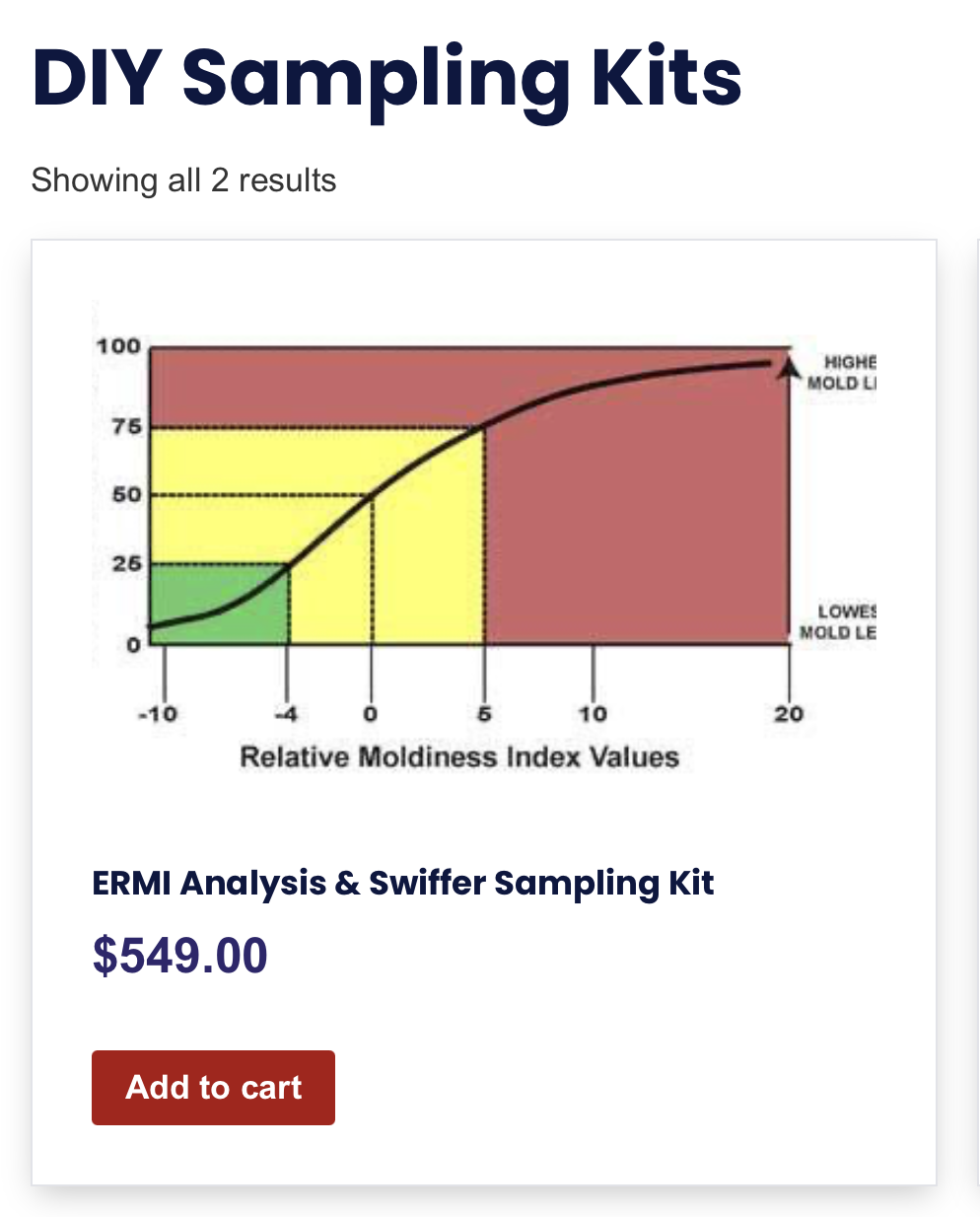
It’s not a technology without its flaws (for example, my mouldy home had a huge source of Stachybotrys (black mould) and the ERMI didn’t pick up any Stachybotrys, but still flagged an abnormal mould ecology in the home).
The main problem is - if it comes back showing abnormal mould, you’ll then need to hire an inspector as it won't tell you:
-where the mould is, how to fix it, how hard it would be to fix, what contents are contaminated in relation etc. etc.
So you’re better to save the $540, and get a thorough inspection by someone experienced who is willing to spend the time hunting around the home for you with specialised tools and targeted sampling.
If you’re in Aus/NZ, check this site for an inspector: https://www.asbb.org.au/practioner-map
Do not:
Hire an inspector who is associated with a remediation company, it’s a huge conflict of interest
Hire anyone talking in a positive way about “fogging” (chemically misting) the home to fix a mould problem (it’s a nonsense procedure)
Hire someone who does not know about CIRS
Hire a remediation company before you’ve had a proper inspection done. Step one is independent inspector, step two is provide a remediator with the scope of works from the inspector.
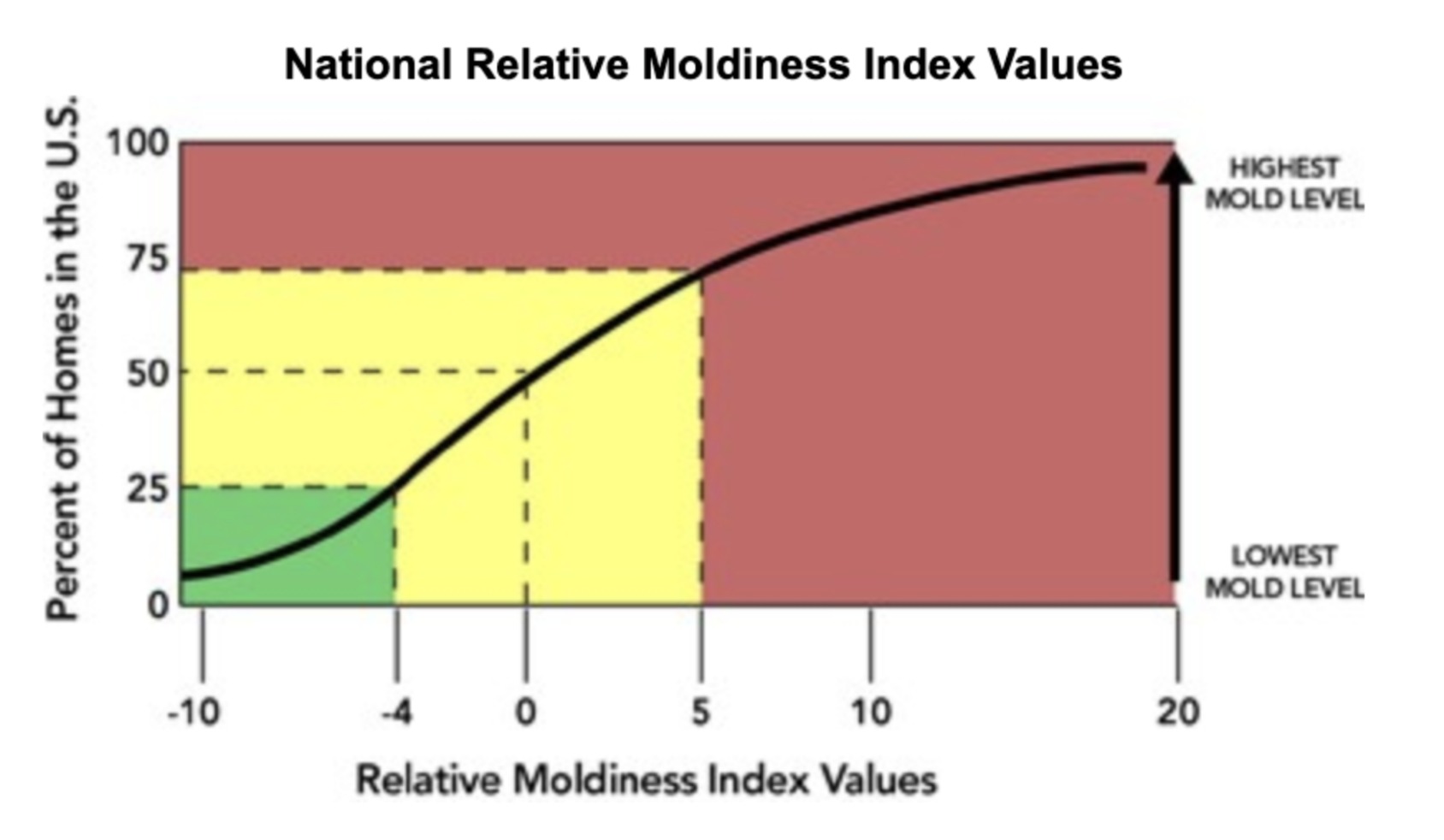
ERMI Test Score Chart
Regarding ERMI’s, they may become more relevant if:
- you’ve already had an inspection,
- you don’t fully trust the findings,
- the inspection felt kind of short and dodgy
- you still feel unwell whenever you’re in the home
Then it would be a good idea to either 1) hire a better inspector, or 2) do a dust test.
Again, if wanting to order an ERMI independently in Australia, many people use:
(If you need more info about ERMI tests - I’ve compiled a blog post here - https://www.mouldwise.com.au/articles/ermi)
If you’ve already had an inspection or remediation and things still don’t feel right - please reach out.
Unfortunately, many reports I review suggest:
- important moisture sources were missed,
- contamination was underestimated,
- sampling was dodgy,
- remediation was incomplete,
-no post remediation verification testing was done
- or the process was fogging-focused without proper source removal and HEPA cleaning.
** If you’re up to the stage of wanting to know how to clean some of your contents, which does not need to be a consideration for today - I’ve written about that here: https://www.mouldwise.com.au/articles/spc **
Note that your inspector will use sampling to classify which of your contents are contaminated or not contaminated (ie an air sample is high in your lounge room - so treat all lounge room contents as requiring decontamination cleaning), so you can wait until then to make any decisions about contents.
Conclusion
One of the biggest things I see happen is people becoming paralysed by dozens of theories and endless online opinions (many of them completely wrong). What I’ve laid out above is the basics of what you need to know up front.
If you can only do one thing today, do the free health screening tests - being the VCS test and the cluster symptoms test. That will give you a good idea of whether you need to continue to pursue this or not.
Take it one step at a time, and that will help prevent fear making the decisions for you. There’s light at the end of this tunnel - and great health!
Need further help?
If you'd like personalised guidance - interpreting your situation, your reports, testing, or your next steps - you can book an online consult with me over Zoom, wherever you are in Australia. (On-site inspections are paused until 2027 while I'm on maternity leave, but consults and report reviews are available now.)
A consult focuses on:
practical next steps
understanding your reports and testing
mould/CIRS-friendly building and remediation guidance
avoiding common industry mistakes
reducing the overwhelm so you can move forward with confidence
Options start at $90 for a 30-minute Quick Call, or $190 for a full one-hour Mould & CIRS Consultation. If you've already had an inspection, I also offer independent report reviews. All prices include GST - see the full list and book instantly below.
If you want to get started by purchasing an air purifier (pulls mould spores out of the air) and/or a dehumidifier (pulls moisture out of the air to inhibit mould growth) (both are technically required), then these are my recommended brands.
Air purifiers - Inova
Inova is my recommended air-purifier brand and the one I use myself. They come in a few sizes:
E8 (small) - great for bedrooms
E20 (large) - for open-plan areas and larger bedrooms
DE20 (large) - same as the E20, but with a screen that tells you when to change the filter
These need to be ordered through MouldWise directly (they don't offer discount codes, only discounted pricing for industry professionals). For current pricing and help choosing the right size for your space, please contact me at info@mouldwise.com.au.
Dehumidifiers
My recommended models are in my Amazon dehumidifier list (affiliate link). You can also buy direct from NWT or Ausclimate.
Humidity Monitor (Thermo-hygrometer)
About $13 on Amazon and every home should have one - you're aiming to keep humidity below 60%. There's one in my Healthy Home list (affiliate link).
The rest of my kit - mould-safe laundry products, cleaning gear, storage to prevent cross-contamination - lives on my gear page.